If you’re running a logistics business, a quarry, a cement plant, or any operation where heavy vehicles move in and out daily, a truck weighing machine is not optional — it’s essential. And if you’re shopping for one in 2026, you’ve probably noticed that prices vary quite a bit. A portable weighbridge might cost you ₹5 lakhs, while a fully built RCC weighbridge with software and civil work can easily cross ₹ 25 lakhs.
This guide breaks it all down — machine types, realistic price ranges, what drives the cost up or down, and what to watch out for before you sign a purchase order.
What Is a Truck Weighing Machine?
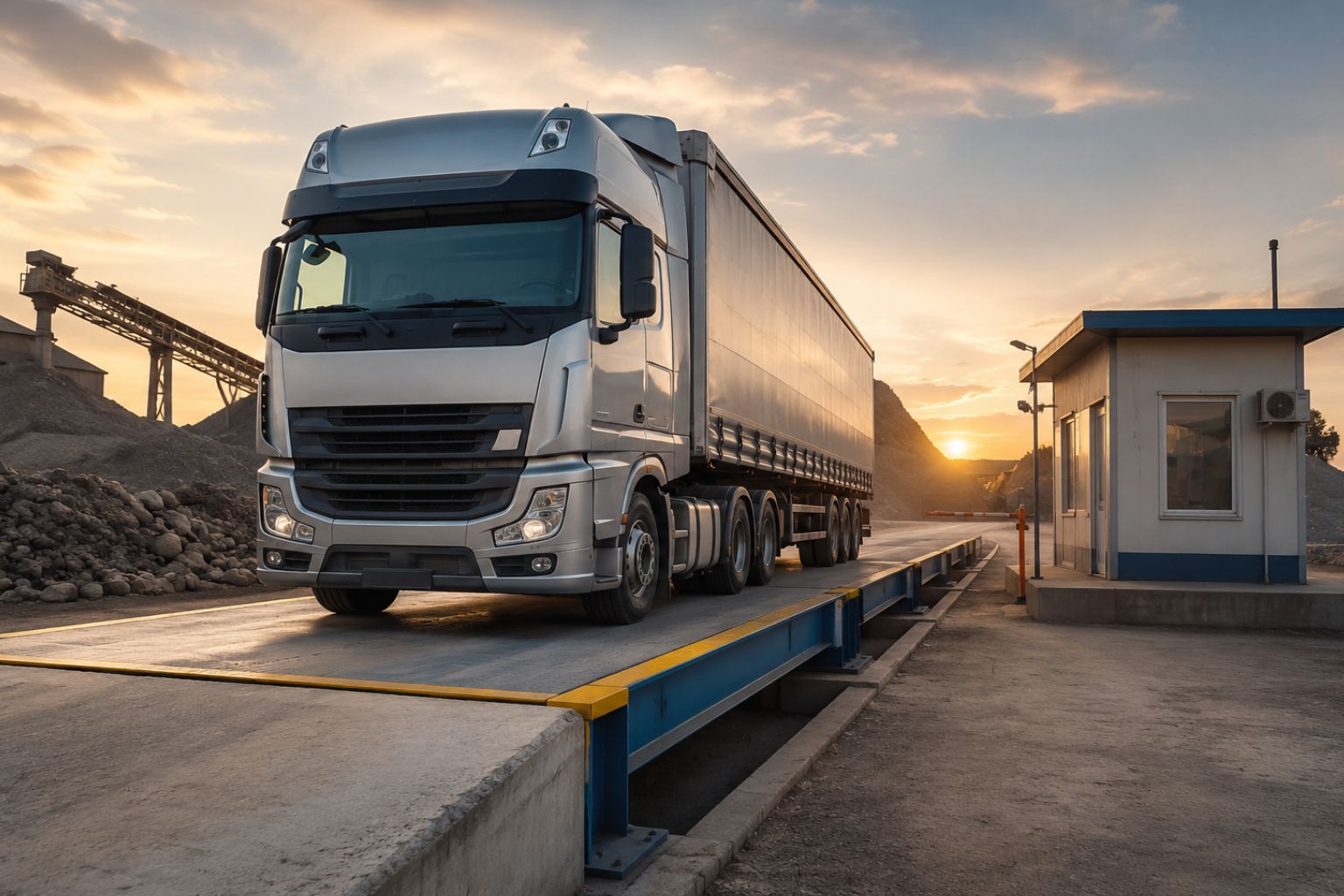
A truck weighing machine — commonly called a weighbridge or weigh bridge — is a large platform scale designed to measure the gross weight of loaded vehicles. In India, they’re used across industries like mining, steel, agriculture, construction, cement, and logistics.
The machine works by having the truck drive onto a steel or concrete platform. Load cells beneath the platform convert the vehicle’s weight into an electrical signal, which is processed and displayed digitally.
Sounds straightforward. But the type of installation, load cell quality, platform size, and software integration can make a massive difference in both cost and long-term performance.
Types of Truck Weighing Machines and Their Prices in India (2026)
1. Pitless Weighbridge (Surface-Mounted)
A pitless weighbridge sits above ground level with steel approach ramps on both ends. No pit excavation is needed, which means less civil work, faster installation, and significantly easier maintenance access.
Typical Price Range: ₹7 lakh – ₹18 lakh
This is one of the more popular choices for new industrial setups, particularly where the site isn’t yet developed or where soil conditions make pit digging expensive. Load cell inspection and replacement are straightforward since everything is accessible from the outside.
The only real trade-off is space — you need enough yard length to accommodate the platform plus the ramps on both sides. If your entry/exit area is tight, this could be a constraint.
Top Truck Weighbridge Manufacturers in India: Complete Buyer’s Guide for 2026
2. Pit-Type Weighbridge
In a pit-type installation, the weighbridge platform is set into a dug pit so it sits flush with the surrounding ground level. No ramps, no height difference — vehicles just drive straight onto the platform.
Typical Price Range: ₹8 lakh – ₹22 lakh
This type looks clean, is driver-friendly, and works well in high-traffic facilities where you want smooth, uninterrupted vehicle flow. It’s a common sight at large factories, steel plants, and busy logistics depots.
The issue that many buyers underestimate is pit maintenance. Water accumulation during monsoons, debris settling at the bottom, and restricted access for load cell servicing are real operational headaches — especially in low-lying areas. Make sure proper drainage is engineered into the design from day one, not as an afterthought.
3. RCC Weighbridge (Reinforced Cement Concrete)
An RCC weighbridge uses a reinforced concrete platform instead of the conventional fabricated steel deck. The load cells are embedded within the concrete structure, making the overall setup extremely robust and long-lasting.
Typical Price Range: ₹12 lakh – ₹28 lakh
If you’re setting up a permanent facility — a government weighcheck post, a mining operation, a large port-side weighing station — an RCC weighbridge is built to last decades with minimal structural maintenance. Concrete doesn’t corrode, doesn’t warp under heat, and handles repeated overloading cycles better than steel in the long run.
The downside is time. RCC construction involves curing periods and more detailed civil work, so the installation timeline is longer. It’s also harder to relocate or modify once set up. For a permanent, high-throughput site, though, this is often the most cost-effective choice over a 20-year horizon.
4. Portable Weighbridge
A portable weighbridge is a modular steel platform system that can be assembled, used, and relocated without any permanent civil works. Some models bolt together on-site in a matter of hours.
Typical Price Range: ₹5 lakh – ₹14 lakh
These are used at temporary project sites, construction depots, road enforcement checkpoints, and by businesses that haven’t yet finalised their permanent facility layout. Don’t let the lower price make you assume lower performance — a quality portable weighbridge can handle 60–80 tonnes and is fully Legal Metrology-compliant.
One thing to keep in mind: because there’s no permanent foundation, you need a reasonably level and firm surface for accurate readings. Soft or uneven ground can introduce errors.
What Factors Affect the Price?
This is where most buyers get confused. Two vendors quote wildly different prices for a “40-tonne weighbridge,” and you’re left wondering who’s inflating the number and who’s cutting corners.
Here’s what’s actually driving the cost:
Platform Length and Width
Standard truck weighbridge platforms in India are typically 18m x 3m or 20m x 3m. Longer platforms cost more — both in material and in the number of load cells required. If you’re weighing oversized vehicles or tankers, you’ll need a wider or longer platform, and that pushes the price up.
Load Cell Quality
This is the most critical component, and also where shortcuts hurt you the most. Good load cells from brands like Vishay, HBM, or Mettler Toledo are priced higher but are designed to last 10–15 years with stable accuracy. Cheaper load cells may drift in accuracy within a couple of years, especially in harsh environments.
Don’t buy a ₹10 lakh weighbridge and then discover the load cells need replacement in three years. That’s a false economy.
Structural Steel Grade
The platform is fabricated from MS (mild steel) or high-tensile steel. High-tensile platforms weigh less, resist deflection better, and generally hold up under repeated heavy-vehicle cycles. They cost more upfront, but they’re worth it for high-traffic installations.
Software and Display Unit
Basic systems come with a simple digital indicator. Advanced setups include PC-based software with truck-in/out management, RFID integration, camera feeds, report generation, and cloud connectivity.
A standalone indicator might cost ₹30,000–₹60,000. A full PC-based weighbridge management system can run ₹1.5 lakh – ₹5 lakh, depending on the features.
Legal Metrology / OIML Certification
In India, commercial weighbridges must be verified and stamped by Legal Metrology authorities. The certification fees vary by state, but the real cost here is in buying a machine that meets the required accuracy class in the first place. Not all weighbridges sold in India are automatically Legal Metrology-compliant — ask for it explicitly.
Connectivity and Automation
If you want Aadhaar-linked or RLVD (Remote Location Verification Device) integration as mandated in certain states, or if you want the weighbridge to tie into your ERP or transport management system, expect to pay a premium for those integrations.
Hidden Costs Buyers Often Miss
Quoted price and total installed cost are two different things. Here’s what often isn’t included in the initial quote:
Civil Work: Pit excavation, concrete foundation, drainage channels — these can easily add ₹2 lakh – ₹6 lakh depending on soil type and site conditions.
Ramp Construction: For pitless weighbridges, approach ramps need proper engineering. Don’t accept a rough estimate; get a proper drawing and material specification.
Annual Maintenance Contract (AMC): A decent AMC from a reliable service provider typically costs ₹30,000 – ₹80,000 per year. Skip this at your own risk.
Re-stamping Fees: Legal Metrology stamping has to be renewed periodically. Fees vary by state, but should be budgeted for.
Power Backup: A UPS or generator connection is often needed to prevent mid-weighing shutdowns. Not always included in the main quote.
Top Brands Available in India
The market has both established Indian manufacturers and imported equipment. Here are the names you’ll come across most often:
Indian Brands:
- Essae Teraoka
- Venus Weighing
- Metroweigh
- Avery Weigh-Tronix (India operations)
- Mettler Toledo India
- Basi Weighing Systems
Imported / Premium:
- Schenck Process
- Flintec
- HBM (Hottinger Baldwin Messtechnik)
For most industrial applications in India, a well-built domestic brand with good service coverage will serve you better than an expensive imported machine with limited local support. Don’t underestimate the importance of service response time — when your weighbridge is down, your entire dispatch operation may be halted.
How to Choose the Right Truck Weighing Machine
Here’s a simple way to think through your decision:
Step 1 – Define your vehicle type and maximum weight. What’s the heaviest vehicle you’ll be weighing? A fully loaded 10-wheeler? A mining dumper? Tri-axle trailer? Match the machine’s capacity to your actual requirement, with a 20–25% buffer.
Step 2 – Assess your daily throughput. How many vehicles cross the weighbridge daily? For 20–30 vehicles a day, a basic static weighbridge is fine. For 200+ vehicles, you might need faster throughput and possibly two lanes.
Step 3 – Check your site conditions. High water table? Rocky soil? Constrained entry/exit space? These factors determine whether you go pit-type, pitless, RCC, or portable. Don’t let a vendor push you toward a type that doesn’t suit your ground conditions.
Step 4 – Understand your compliance requirements. Do you need Legal Metrology stamping for commercial billing? Is RLVD mandatory in your state? Are you in a sector where regulatory audits are frequent?
Step 5 – Evaluate after-sales support. Ask vendors: How many service engineers do you have in my area? What’s your typical response time for breakdown calls? A machine that goes unserviced for two weeks in peak season is a serious problem.
What Is a Truck Weighbridge and Why Every Logistics Company in India Needs One?
What’s Changed in 2026?
A few developments worth noting:
GST on weighbridge equipment remains applicable at 18% (HSN 8423). Factor this into your budget — the quoted price from most manufacturers will be exclusive of GST.
RLVD integration mandates have expanded in certain states. If you’re buying for a commercial weighbridge that interfaces with transport checkposts, verify the current requirements with your state transport department.
Digital/Automated Weighbridges are seeing higher adoption in logistics parks and warehouses, largely driven by the growth of organised freight movement and the push toward paperless documentation. If you’re setting up a modern facility, it’s worth investing in a system that integrates with your WMS or ERP.
Steel prices have stabilised somewhat compared to the volatility seen in 2021–23, which means weighbridge platform prices are somewhat more predictable this year.
Questions to Ask Any Vendor Before Buying
Before you finalise a purchase, here are practical questions to put to your shortlisted vendors:
- What is the accuracy class of the load cells, and are they OIML R60-certified?
- Is the platform built with IS 2062 or higher-grade steel?
- What is the warranty period, and what does it cover specifically?
- Do you provide stamping assistance for Legal Metrology verification?
- What is the service coverage in my region — how many engineers, and average response time?
- What’s included in the AMC, and what’s excluded?
- Can the software integrate with [your ERP/software name]?
- Do you provide a factory acceptance test (FAT) before dispatch?
Final Word
A truck weighing machine is not something you replace every five years. A good installation, done right, should serve you for 15–20 years with routine maintenance. So the goal isn’t to find the cheapest option — it’s to find the best value for your specific operation.
Get at least three quotes. Compare not just the price but the specifications, warranty terms, service network, and software capability. If two vendors are quoting ₹12 lakh and one is quoting ₹7 lakh for what looks like the same machine, ask hard questions about the load cell brand, steel grade, and what’s excluded in the lower quote.
In this industry, what you save upfront often costs you double later in downtime, repairs, and accuracy problems. Buy once, buy well.